Jiyo Parsi Scheme: Up to ₹12.50 Lakh Government Assistance — Eligibility, Benefits & How to Apply Online
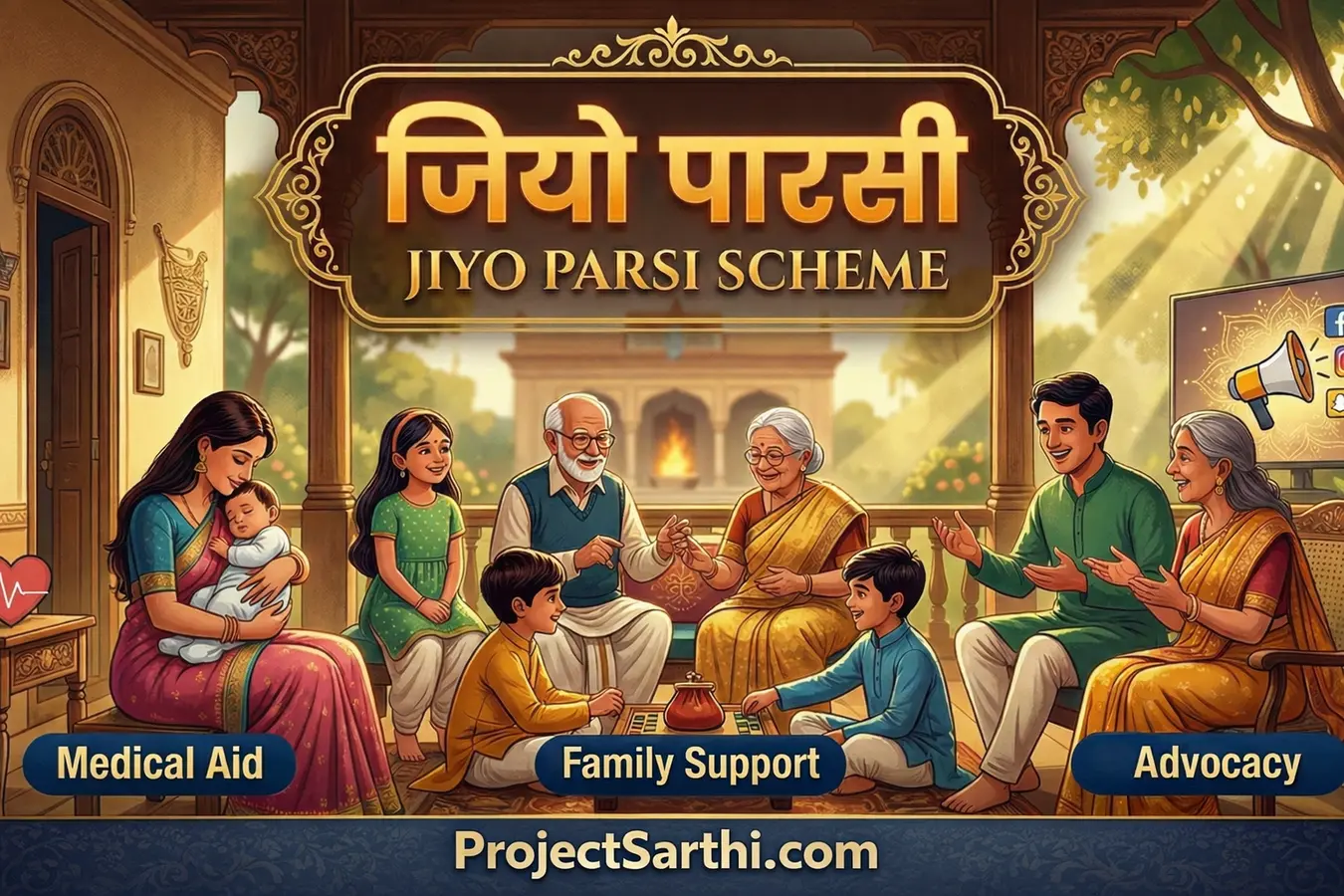
The Jiyo Parsi Scheme is a unique Central Sector Scheme launched by the Government of India to arrest the declining population of the Parsi (Zoroastrian) community. Since its inception in 2013, the scheme has facilitated the birth of over 400 Parsi children and continues to provide financial assistance across three key components: Medical Assistance, Health of Community, and Advocacy.
If you are a Parsi/Zoroastrian residing in India and want to understand everything about this scheme — eligibility, benefits, financial norms, how to apply online — this comprehensive guide covers it all.
1. What is the Jiyo Parsi Scheme?
The Jiyo Parsi Scheme (जियो पारसी योजना) is a 100% Central Sector Scheme formulated by the Ministry of Minority Affairs, Government of India. It was first launched in September 2013 and subsequently revised in September 2017. The scheme's improved guidelines were issued in 2024 for the 15th Finance Commission Cycle (FY 2021-22 to FY 2025-26).
The scheme is specifically designed for the Parsi/Zoroastrian community, a notified minority community under the National Commission of Minorities Act, 1992. Financial assistance is provided directly to eligible Parsi couples through Direct Benefit Transfer (DBT) mode via the Aadhaar Payments Bridge System (APBS).
Official Portal: https://minorityaffairs.gov.in → Programme → Special Needs → Jiyo Parsi
Contact:
- Jiyo Parsi Division, Ministry of Minority Affairs
- 11th Floor, Pt. Deendayal Antyodaya Bhawan, CGO Complex, Lodhi Road, New Delhi – 110003
- Email: jiyoparsi-mma[at]gov[dot]in
2. Why Was the Jiyo Parsi Scheme Launched?
The Demographic Crisis of the Parsi Community
The Parsi population in India has witnessed a catastrophic decline over the past eight decades:
| Year | Parsi Population in India |
|---|---|
| 1941 | 1,14,000 |
| 2011 | 57,264 |
This represents a decline of nearly 50% in seven decades. The community faces a unique demographic challenge driven by:
- Late marriages — younger Parsis tend to marry later in life, reducing the reproductive window
- Infertility issues — a significant proportion of couples struggle to conceive
- Aging demographic profile — a disproportionately large number of middle-aged and elderly members compared to younger generations
- Eldercare burden — younger couples who care for dependent elderly family members often delay or forgo having children, further depressing birth rates
Two independent impact assessments — conducted by the International Institute for Population Sciences (IIPS) and the Tata Institute of Social Sciences (TISS), Mumbai — confirmed that the Jiyo Parsi Scheme has been successful in creating positive demographic impact. However, the studies also emphasized that the scheme must continue steadily over time to fully stabilize the population.
3. Objectives of the Jiyo Parsi Scheme
The scheme has the following core objectives:
- Reverse the declining trend of the Parsi/Zoroastrian population in India
- Adopt a scientific protocol and structured medical interventions for infertility treatment
- Stabilize the population of the community over the medium term
- Increase the overall population of Parsis in India through targeted financial and medical support
ऐसी 4500+ सरकारी योजनाओं की जानकारी एक ही जगह पाएं: ProjectSarthi.com – India’s Largest Government Schemes Portal
4. Three Components of the Jiyo Parsi Scheme
The Jiyo Parsi Scheme adopts a multi-pronged approach through three distinct components:
(a) Medical Assistance Component
This component provides financial support for fertility treatment. Recognizing that infertility — defined medically as the inability to conceive for more than two years — is a complex clinical and socio-psychological condition, the scheme covers:
- Assisted Reproductive Technologies (ART)
- In-Vitro Fertilization (IVF) — up to 4 cycles
- Intra Cytoplasmic Sperm Injection (ICSI)
- Surrogacy (in accordance with the Surrogacy (Regulation) Act, 2021)
- Post-conception medical expenses
- Post-natal care (NICU, surgeries, special checkups)
All treatments must be conducted at hospitals/clinics recognized or accredited by the Central/State Government, and full confidentiality of patients is maintained.
(b) Health of the Community (HoC) Component
This component motivates Parsi couples to have more children by providing ongoing financial support for:
- Childcare assistance for existing and newborn children
- Elderly care assistance for dependent elderly family members (aged 60 years or above)
This helps reduce the financial burden that often discourages younger couples from having children while also caring for aging family members.
(c) Advocacy Component
This component raises awareness among the Parsi community — especially the younger generation of marriageable age — through:
- Counseling sessions and workshops
- Seminars and medical camps
- Publicity brochures and advocacy films
- Social media outreach campaigns
- Information dissemination through major Parsi newspapers and periodicals
Advocacy activities are conducted by State Governments with the assistance of selected Parsi Punchayets, Anjumans, and Agiaries.
5. Financial Assistance & Norms (Detailed)
5.1 Medical Assistance Component — Financial Norms
| Category | Maximum Assistance |
|---|---|
| Infertility treatment (IVF, ICSI, Surrogacy, Donor costs) | Up to Rs. 6 lakh or actual expenditure, whichever is less |
| IVF cycles | Rs. 1,50,000 per cycle (maximum 4 cycles) |
| Other medical expenses after conception (diagnostics, medication, hospitalization, delivery) | Up to Rs. 4 lakh or actual, whichever is less |
| Pre-delivery reimbursement (of the above Rs. 4 lakh) | Up to Rs. 2 lakh |
| Post-natal care (NICU, surgery, special check-ups — from birth to 6 weeks) | Up to Rs. 2.50 lakh or actual, whichever is less |
Note: All reimbursements are subject to verification of submitted bills. Standard medical protocols of the Ministry of Health and Family Welfare, Government of India, must be followed. ART (Regulation) Act, 2021 and Surrogacy (Regulation) Act, 2021 compliance is mandatory.
Income-Based Reimbursement Slabs for Medical Component
| Annual Family Income (All Sources) | Financial Assistance |
|---|---|
| Up to Rs. 15 lakh | 100% |
| Above Rs. 15 lakh up to Rs. 25 lakh | 75% |
| Above Rs. 25 lakh up to Rs. 30 lakh | 50% |
| Above Rs. 30 lakh | Not eligible |
Preference is given to Parsi couples with the lowest annual family income.
5.2 Health of the Community (HoC) Component — Financial Norms
| Category | Rate of Assistance |
|---|---|
| Childcare assistance (per child, for existing and newborn children) | Rs. 8,000 per month until the child turns 18 years |
| Elderly care (per dependent elderly member aged 60+ years) | Rs. 10,000 per month per dependent elderly (from birth of child until the elderly member is alive) |
| Avesta-Pahlavi language course fee reimbursement (distant learning mode) | Up to Rs. 6,000 per annum |
Key conditions for HoC Component:
- Assistance is available only to Parsi couples who bore a child after 2017-18 (when this component was introduced)
- Annual family income must be less than Rs. 15 lakh per annum
- Maximum number of beneficiaries under this component: 200
- No funds are provided for construction, maintenance, or recurring expenditure on crèches or similar infrastructure
- Elderly care assistance begins after the birth of the child
- District authorities monitor elderly care to ensure that families receiving benefits are giving proper respect to elderly members
- Annual Biometric Authentication of all beneficiaries is mandatory; only authenticated beneficiaries receive payments
5.3 Advocacy Component — Budget Allocation
| Year | Advocacy (Rs. Cr.) | Medical Component (Rs. Cr.) | Health of Community (Rs. Cr.) | Total Outlay (Rs. Cr.) |
|---|---|---|---|---|
| 2021-22 | 2.11 | 3.62 | 4.27 | 10.00 |
| 2022-23 | 2.11 | 3.62 | 4.27 | 10.00 |
| 2023-24 | 2.11 | 3.62 | 4.27 | 10.00 |
| 2024-25 | 2.11 | 3.62 | 4.27 | 10.00 |
| 2025-26 | 2.11 | 3.62 | 4.27 | 10.00 |
| Total | 10.55 | 18.10 | 21.35 | 50.00 |
The total budgetary provision for the scheme is Rs. 50 crore for the 15th Finance Commission Cycle (2021-22 to 2025-26).
6. Eligibility Criteria
To be eligible for the Jiyo Parsi Scheme:
- The applicant must be a Parsi/Zoroastrian residing in India
- The Parsi community is a notified minority community under the National Commission of Minorities Act, 1992
- For the Medical Component, annual family income from all sources must be up to Rs. 30 lakh
- For the Health of Community Component, annual family income must be less than Rs. 15 lakh and the child must have been born after 2017-18
7. How to Apply Online — Step-by-Step Guide
The application process for the Medical Assistance Component of the Jiyo Parsi Scheme is entirely online through the ServicePlus portal.
Step 1: Keep These Documents & Information Ready
Before beginning, ensure you have the following:
- Mobile number (active, for OTP verification)
- Email ID (active, for OTP verification)
- Aadhaar number
- Recent passport-size photograph (plain white background, JPG format, size > 100 KB, no dark glasses)
- All certificates in PDF format (file size < 512 KB each), including:
- Income certificate from State/District Government or Income Tax Return
- Treatment plan (from recognized hospital/clinic)
- Doctor's prescription
- Cancelled cheque (for bank details)
Step 2: One-Time Registration on ServicePlus Portal
- Visit the official portal via: https://minorityaffairs.gov.in → Programme → Special Needs → Jiyo Parsi → Portal for Jiyo Parsi Scheme → Medical Assistance Component → Apply Now → Apply For ServiceOR directly visit: https://serviceonline.gov.in/dbt/citizenRegistration.html
- Fill in the Registration Form:
- Full Name
- Email ID
- Mobile Number
- Password (minimum 9 characters: 1 special character, 1 numeric, 1 uppercase, 1 lowercase)
- Select State
- Enter Captcha
- Accept Terms & Conditions → Submit
- Verify your Email ID and Mobile Number through the OTPs sent to each. Your registration ID/User ID and password will be sent to your registered mobile and email.
Important: Your email ID and mobile number will be the primary communication channels with the Ministry. Keep them active and accessible.
Step 3: Login and Fill Application Form
- Login at https://serviceonline.gov.in/dbt/loginWindow.do using your registered email ID and password.
- Navigate to: Apply for Services → View All Available Services → Search "Jiyo Parsi" → Jiyo Parsi - Medical Assistance Component → View
- Fill the Application Form (Part-II):
- Personal details (auto-populated from your profile)
- Spouse details
- Treatment details (name of hospital, contact details, doctor's letter, proposed treatment plan)
- Bank details of joint account (Aadhaar-linked)
- IFSC Code, Bank Name, Account Number
- Upload all mandatory documents
- Fill declaration section
- Check 'Preview' → verify all details → click 'I Agree' → Submit
Step 4: After Submission
- You will receive an Application Reference Number
- An Acknowledgement Slip will be generated — save or print it for future reference
- Track your application status using your login credentials at the portal
8. Implementation Structure
District Level Committee
- Chairperson: District Collector
- Member: District Minority Welfare Officer
- Role: Receives proposals, evaluates with doctors/clinics, recommends beneficiaries, scrutinizes bills for reimbursement. Meets quarterly to consider HoC component applications.
State Level Project Monitoring Committee
- Chairperson: Secretary, Department of Minority Welfare
- Members: 2 District Collectors
- Role: Monitors and supervises scheme implementation; makes recommendations for effective execution at state level
Sanctioning Committee (at Ministry level)
- Chairperson: Concerned Joint Secretary, Ministry of Minority Affairs
- Members: Representative from Ministry of Health & Family Welfare; Concerned Director/DS as Convener
- Role: Considers and approves proposals; oversees overall implementation
Oversight Committee
- Chairperson: Minister/Secretary, Ministry of Minority Affairs
- Members: 1 Representative from M/o Health & Family Welfare; 1 Representative from State Government
- Role: Meets annually to take stock of progress
9. Transfer of Funds
- Medical Component & HoC Component: Funds are released through Direct Benefit Transfer (DBT) via the Aadhaar Payments Bridge System (APBS) directly to the beneficiary's Aadhaar-linked joint bank account
- Advocacy Component: Payments are made through the Central Nodal Agency (CNA) to respective State Governments on a quarterly basis, upon receipt of duly verified Utilization Certificates
10. Confidentiality
The scheme places the highest priority on patient confidentiality. Names and identities of all targeted couples and beneficiaries are kept strictly confidential throughout the entire process — from application to treatment to reimbursement.
11. Monitoring and Evaluation
- A Third Party Concurrent Evaluation is conducted annually by an independent agency that reaches out to beneficiaries and stakeholders and submits an assessment report to the Ministry
- Quarterly progress reports from States assist the Ministry in monitoring and taking corrective action
- Ministry officers conduct field visits to a sample of beneficiaries for direct evaluation
- A Mid-term appraisal is conducted during the scheme period
- The scheme is reviewed at the end of each Finance Commission cycle
12. Achievements of the Jiyo Parsi Scheme
Since its inception in 2013-14, the Jiyo Parsi Scheme has achieved the following:
- More than 400 Parsi children have been born with the assistance of the scheme
- Two independent impact assessments (by IIPS and TISS) have confirmed the scheme's positive demographic impact
- The scheme has brought medical awareness about fertility treatments to a community that previously had limited access to structured government support
13. Scheme Period and Budget
- Scheme Period: FY 2021-22 to FY 2025-26 (15th Finance Commission Cycle)
- Total Budget: Rs. 50 crore (100% Central Sector Scheme)
- Annual Outlay: Rs. 10 crore per year
The Ministry reserves the right to modify the provisions of the scheme, and a review is planned at the end of the 15th Finance Commission period.
14. Frequently Asked Questions (FAQs)
Q1. Who can apply for the Jiyo Parsi Scheme? Any Parsi/Zoroastrian residing in India is eligible to apply. The community is notified as a minority under the National Commission of Minorities Act, 1992.
Q2. What is the maximum financial assistance available under the Medical Component? Up to Rs. 6 lakh for infertility treatment (IVF, ICSI, surrogacy) + up to Rs. 4 lakh for post-conception medical expenses + up to Rs. 2.50 lakh for post-natal care. The total can go up to Rs. 12.50 lakh, subject to income-based eligibility and actual expenditure verification.
Q3. Can a couple with income above Rs. 30 lakh apply? No. The Medical Component is available only to families with annual income up to Rs. 30 lakh. The Health of Community Component requires income below Rs. 15 lakh.
Q4. Is the Health of Community benefit available for children born before 2017-18? No. The HoC component is available only for children born after its introduction in 2017-18.
Q5. How are payments made to beneficiaries? Payments under the Medical and HoC components are made directly to the beneficiary's Aadhaar-linked joint bank account via the Aadhaar Payments Bridge System (APBS) under Direct Benefit Transfer (DBT) mode.
Q6. Is the IVF treatment covered fully? IVF is covered at Rs. 1,50,000 per cycle for a maximum of 4 cycles (total Rs. 6 lakh), subject to the overall ceiling of Rs. 6 lakh for infertility treatment and income-based reimbursement percentage.
Q7. Where do I apply? Apply online at: https://minorityaffairs.gov.in → Programme → Special Needs → Jiyo Parsi → Portal for Jiyo Parsi Scheme → Medical Assistance Component → Apply Now
Q8. Is there any income limit for Avesta-Pahlavi course fee reimbursement? This benefit is available under the HoC component, hence the family income must be below Rs. 15 lakh per annum.
Q9. How many children can be covered under childcare assistance? Financial assistance of Rs. 8,000 per month is available for existing children and the newborn child until each child turns 18 years.
Q10. What happens if the information submitted is found to be false? As per the declaration in the application form, incorrect or false information will lead to summary rejection of the application, and the applicant may be barred from applying for the scheme in the future.
Conclusion
The Jiyo Parsi Scheme is one of India's most focused and community-specific welfare initiatives — a government effort to preserve a small but culturally rich minority community from demographic extinction. By combining medical assistance for fertility treatments, financial support for childcare and eldercare, and widespread community advocacy, the scheme takes a holistic approach to reversing the Parsi population decline.
If you are a Parsi/Zoroastrian couple in India facing infertility challenges, or if you need financial support to raise your children while caring for elderly dependents, the Jiyo Parsi Scheme provides substantial government-backed assistance. Apply online through the official portal and take advantage of the benefits that are rightfully yours.
Disclaimer: This article is based on the official Jiyo Parsi Scheme Improved Guidelines 2024 and the User Manual for Jiyo Parsi Medical Assistance Portal (June 2025) issued by the Ministry of Minority Affairs, Government of India. For the most current information, always refer to the official portal: minorityaffairs.gov.in
Eligibility Criteria
Applicant must belong to the Parsi community.
Must be Indian citizen.
Married Parsi couple.
Facing fertility issues OR seeking medical assistance for conception.
Income criteria may apply depending on assistance category.
Supporting medical documents required.
Benefits
Up to ₹12.50 lakh assistance
IVF treatment cost coverage
Medical consultation support
Childcare assistance
Eldercare assistance
Counselling services
Application Process
Visit official website https://jiyoparsi.minorityaffairs.gov.in/
Download application form
Fill required details
Attach medical and identity documents
Submit to designated authority
Await screening & approval
Documents Required
Aadhaar Card
Community Certificate (Parsi proof)
Marriage Certificate
Income Certificate
Medical Fertility Reports
Bank Account Details
Passport-size Photographs
Frequently Asked Questions
What is Jiyo Parsi Scheme?
Jiyo Parsi Scheme is a Central Government initiative to encourage growth of Parsi population by providing financial assistance for IVF treatment and related support.
How much assistance is provided?
Eligible couples can receive financial support up to ₹12.50 lakh depending on treatment and category.
References & Official Links
Scheme Details
| Full Name | Jiyo Parsi Scheme: Up to ₹12.50 Lakh Government Assistance — Eligibility, Benefits & How to Apply Online |
| Short Title | JPS |
| Level | Central |
| Scheme For | Parsi Couples (Indian Citizens belonging to Parsi community) |
| Ministry | Ministry Of Minority Affairs |
| Categories | Health & Wellness, Social welfare & Empowerment, Women and Child |
| States | All India |
| Gender | All |
| Age Range | 21 — 45 years |
| Caste/Category | Minority |
| Area | Both |
| Source | jiyoparsi.minorityaffairs.gov.in ↗ |