Mukh Mantri Sehat Yojana (MMSY) Punjab: Eligibility, Health Card, Hospital List, Coverage, All Details
When a serious illness hits a family in Punjab, the first worry is rarely the disease itself. It’s the money. Break the fixed deposit? Sell jewellery? Take a loan? The Mukh Mantri Sehat Yojana (MMSY) was built to take that financial fear off the table.
This article covers everything a Punjab resident needs to know: what MMSY offers, how it evolved from the older scheme, who qualifies, how the coverage works, and what you should do right now to make sure your family is protected.
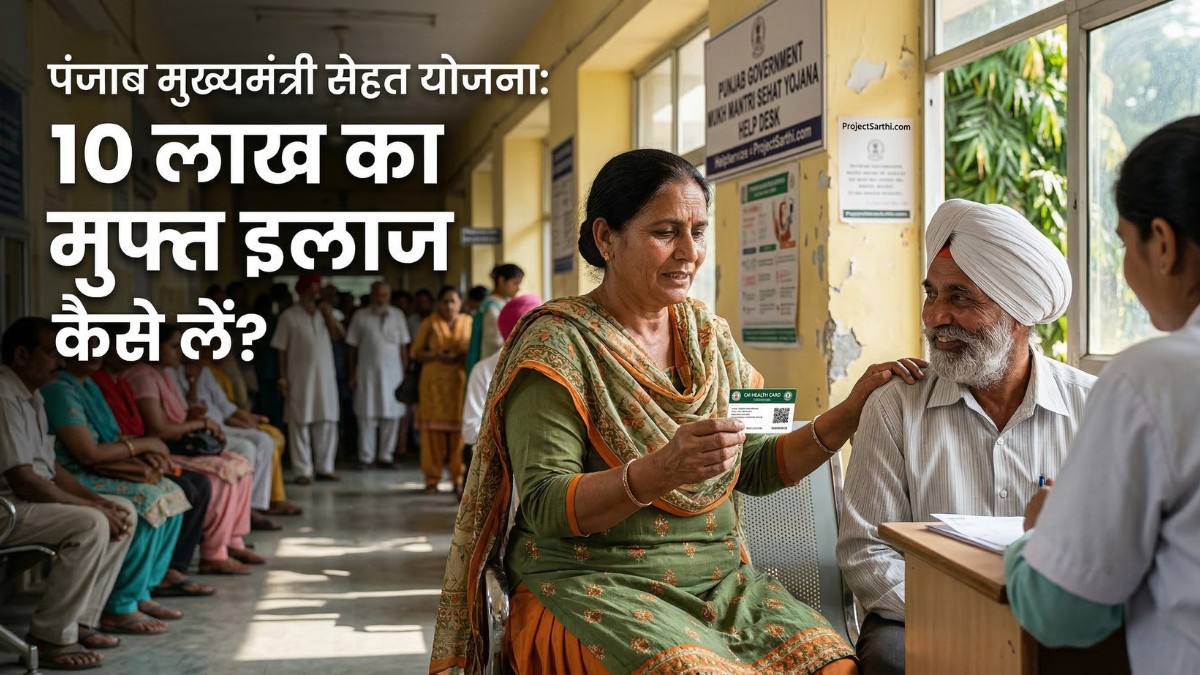
Punjab’s Mukh Mantri Sehat Yojana (MMSY) offers ₹10 lakh per family per year in cashless treatment across 824+ empanelled hospitals. Statewide rollout began 22 January 2026.
What is Mukh Mantri Sehat Yojana (MMSY)?
MMSY is Punjab Government’s flagship health coverage scheme, operated by the State Health Agency (SHA Punjab). Chief Minister Bhagwant Mann launched it in July 2025 alongside AAP national convener Arvind Kejriwal at a public event in Chandigarh. It is a revamped and expanded version of the earlier Sarbat Sehat Bima Yojana (SSBY), which was launched in 2019 under the Ayushman Bharat PM-JAY framework.
The key upgrade: coverage has been doubled from ₹5 lakh to ₹10 lakh per family per year, and the scheme has been made universal. Every bona fide resident of Punjab is now eligible, regardless of income, caste, or age. With this move, Punjab became the first state in India to offer ₹10 lakh universal health coverage to every household.
The Punjab Government allocated ₹778 crore in the 2025-26 budget for this scheme. Pilot registration camps started in September 2025 in Tarn Taran and Barnala districts (128 camps per district), and the statewide rollout began on 22 January 2026.
How is MMSY different from the old SSBY / MMSBY scheme?
The old scheme, officially known as AB PM-JAY MMSBY (Ayushman Bharat PM-JAY Mukh Mantri Sehat Bima Yojana) or Sarbat Sehat Bima Yojana, was launched on 20 August 2019. It offered ₹5 lakh per family per year and covered only specific categories: SECC 2011 data families, Smart Ration Card holders, J-Form holder farmers, small traders registered with the Excise and Taxation Department, small and marginal farmers, accredited and Yellow Card journalists, and construction workers registered with the Punjab Building and Other Construction Workers Welfare Board. Around 45 lakh families were covered under this version.
MMSY replaced and merged the old scheme entirely. The SSBY has been fully absorbed into MMSY as of January 2026. The coverage ceiling is now ₹10 lakh, eligibility is universal with no income cap, and an additional 20 lakh families who were previously uncovered have been brought in, taking the total to approximately 65 lakh families covering nearly 3 crore residents.
If you had a card under the old ₹5 lakh scheme, it is advisable to retain it as it may be useful for continuity during the transition.
How does the ₹10 lakh coverage actually work?
The scheme does not hand out ₹10 lakh in cash. It works as cashless health insurance at empanelled hospitals, using a hybrid model with two layers:
Layer 1: United India Insurance Company handles the insurance-based layer. Punjab formally tied up with them as the insurer for the ₹10 lakh universal rollout, with bids opened in early December 2025. For Ayushman Bharat (PM-JAY) beneficiaries, the premium cost is shared between the central and state government on a 60:40 ratio.
Layer 2: Coverage beyond the insurance layer, up to the ₹10 lakh ceiling, is managed by SHA Punjab on a trust basis. For beneficiaries included exclusively under MMSY (not part of PM-JAY), the Punjab Government bears the entire premium cost.
The scheme operates on package-based pricing under Health Benefit Packages (HBP 2.2), which means treatment costs are fixed and standardized across empanelled hospitals. From the patient’s side, none of this backend complexity matters. You show one health card at the hospital, and the settlement happens between the insurer, SHA Punjab, and the hospital.
Who is eligible for MMSY?
After the expansion, every household in Punjab is eligible with no income cap, no minimum or maximum cap on family members, and no socio-economic criteria. This includes permanent resident families of Punjab, government employees and pensioners, and even government outsourcing, contractual, or consultancy-based workers.
Beneficiaries are identified through the State Resident Data Hub (SRDH) and NFSA databases. Previously covered categories like SECC families, Ration Card holders, J-Form farmers, small traders, journalists, and construction workers continue to remain covered under the expanded scheme.
However, eligibility alone does not activate the benefit. Without a health card, you cannot access cashless treatment.
How do you get the MMSY health card?
There are three ways to get your CM Health Card (also called the MMSY health card or Sehat Card):
Option 1: Ayushman Bharat Portal or Mobile App. Visit the official Ayushman Bharat portal or download the mobile app. Log in as a beneficiary using your mobile number, verify via OTP, and generate your e-card.
Option 2: Sewa Kendra or CSC (Common Service Centre). Visit your nearest Sewa Kendra or CSC with your Aadhaar card, Voter ID, and a passport-size photo. After verification, the card is issued.
Option 3: Empanelled hospital. You can also get assistance at government hospitals and empanelled private hospitals.
One important update: previously, a Sehat Mitra would visit households and issue an appointment slip for the CSC visit. As of 23 February 2026, this step has been discontinued and the slip is no longer needed. You can directly visit a CSC.
A very common misconception is that the card can be made at the hospital during treatment. While hospitals can assist with card generation, relying on this during a medical emergency is risky. Getting the card made while everyone in the family is healthy is the practical approach.
How can you check your eligibility online?
You can verify your eligibility and enrolment status directly on the SHA Punjab portal. Visit sha.punjab.gov.in, go to the Citizen Corner section, click on “Check for Eligibility in Scheme,” enter your Aadhaar number and the captcha, and click Search. The portal will display whether your family is included.
You can also check the beneficiary list using the “Whether my family is entitled under the scheme” option on the same portal. If your name is not appearing, contact the nearest Sewa Kendra, CSC, hospital help desk, or the SHA Punjab helpline.
Which hospitals are covered?
MMSY covers both government and private empanelled hospitals in Punjab and Chandigarh. As of the July 2025 announcement, more than 550 private hospitals were enrolled, with a target to expand to approximately 1,000 facilities. SHA Punjab’s About Us page mentions 824 empanelled hospitals, while the homepage reflects 900+, indicating the network is actively growing.
For treatment outside Punjab, coverage may be available if the hospital is empanelled under the PM-JAY network, but it is best to verify this in advance.
To check whether your preferred hospital is in the network, go to the SHA Punjab website, click the Hospitals tab, and select your district and specialty. The portal also lists de-empanelled hospitals separately, so you can see which ones have been removed. Reaching a hospital in an emergency only to discover it is not empanelled is a completely avoidable problem.
What treatments are covered?
The scheme covers secondary and tertiary care hospitalisation, including surgeries, ICU admissions, specialist treatments, daycare surgeries, and treatment of newborn children. Pre-existing diseases are also covered, which is a significant advantage since many private insurance policies exclude them.
Coverage includes 3 days of pre-hospitalisation and 15 days of post-hospitalisation expenses. Under the scheme, approximately 1,500+ treatment packages are available across specialties like cardiology, neurosurgery, orthopaedics, and cancer treatments. The official portal mentions 2,000+ types of treatments available under the scheme. Additionally, 180 packages are reserved exclusively for government hospitals.
All treatments follow HBP 2.2 package-based pricing, which means costs are standardized. Hospitals cannot charge variable rates for procedures covered under the scheme.
What is the scale of MMSY so far?
The numbers paint a clear picture of the scheme’s reach. The target is to cover approximately 65 lakh families across Punjab’s 3 crore residents. Over 39.50 lakh families have already enrolled. Since the original scheme launched in 2019, over 12.58 lakh treatments have been provided, with the total treatment amount crossing ₹1,299 crore. Between 2019 and 2024 alone, Punjab saw 19.87 lakh hospital admissions under the scheme, with expenditure of ₹2,490.35 crore.
These figures confirm that the scheme is operational at scale, not just an announcement.
Are there any known challenges?
It is worth being aware of some reported implementation challenges. In September 2024, private hospitals cited approximately ₹600 crore in pending reimbursements, which led to disruptions in cashless services at some facilities. The government’s official response stated that the total pending amount was ₹364 crore, of which ₹197 crore was for private hospitals.
For the ₹10 lakh expansion, the coverage ceiling shifts the scheme into expensive treatment territory where hospitals deploy significant resources upfront and then wait for reimbursement. Payment reliability from the government’s side will be a key factor in whether private hospitals continue to participate enthusiastically in the network.
As a patient, the practical takeaway is simple: always confirm with the hospital that they are actively accepting MMSY patients and that there are no ongoing issues before planning an admission.
What should you do right now?
If you live in Punjab, five steps are worth completing today. First, check your eligibility on sha.punjab.gov.in using your Aadhaar number. Second, if you do not have a card, visit your nearest Sewa Kendra or CSC with Aadhaar, Voter ID, and a passport-size photo to get your CM Health Card made. Third, if you already have a card from the old scheme, check whether it is active. Fourth, look up empanelled hospitals in your district on the SHA Punjab portal. Fifth, if your name is not appearing in the beneficiary list, contact the SHA Punjab helpline or nearest CSC for resolution.
Health schemes only help people who have completed the process in advance. Starting your registration after a diagnosis is the hardest and most stressful time to do it. The scheme is real, the benefits are structured, and the scale is significant. But on the ground, none of it matters unless your card is active and your hospital is empanelled. Everything else is just information. These two things are action.
For the most updated information on empanelled hospitals, eligibility verification, and card status, the official SHA Punjab portal at sha.punjab.gov.in remains the most reliable source. And if you want to understand how other major government health and welfare schemes work across India, including Ayushman Bharat, PM Awas Yojana, and more, you can explore detailed guides on ProjectSarthi.com.
Eligibility Criteria
Every household in Punjab is eligible with no income capPermanent resident families of PunjabGovernment employees and pensionersGovernment outsourcing, contractual, or consultancy-based workersNo minimum or maximum cap on family membersNo socio-economic criteria requiredPreviously covered categories continue to remain covered: SECC families, Ration Card holders, J-Form farmers, small traders, journalists, and construction workers
Benefits
Health coverage of Rs. 10 lakh per family per year (doubled from previous Rs. 5 lakh)Cashless treatment at empanelled hospitals across Punjab and ChandigarhCoverage for secondary and tertiary care hospitalisationCovers surgeries, ICU admissions, specialist treatments, daycare surgeriesTreatment of newborn children includedPre-existing diseases are covered3 days of pre-hospitalisation expenses covered15 days of post-hospitalisation expenses coveredOver 1,500 treatment packages available across specialties including cardiology, neurosurgery, orthopaedics, and cancer treatments2,000+ types of treatments available under the scheme180 packages reserved exclusively for government hospitalsPackage-based standardized pricing under Health Benefit Packages (HBP 2.2)Network of 900+ empanelled hospitals (government and private)
Application Process
Check Eligibility: Visit sha.punjab.gov.in, go to Citizen Corner section, click on 'Check for Eligibility in Scheme', enter your Aadhaar number and captcha, click Search to verify if your family is includedGet CM Health Card through any of these three options:Option 1 - Ayushman Bharat Portal/App: Visit official Ayushman Bharat portal or download mobile app, log in as beneficiary using mobile number, verify via OTP, generate e-cardOption 2 - Sewa Kendra or CSC: Visit nearest Sewa Kendra or Common Service Centre with required documents (Aadhaar card, Voter ID, passport-size photo), card will be issued after verification. No appointment slip needed as of 23 February 2026Option 3 - Empanelled Hospital: Get assistance at government hospitals and empanelled private hospitalsVerify Hospital: Check if your preferred hospital is empanelled by visiting SHA Punjab website, clicking Hospitals tab, and selecting your district and specialtyAvail Treatment: Show your CM Health Card at the empanelled hospital for cashless treatment. Hospital will settle directly with insurer and SHA PunjabFor Issues: If name not appearing in beneficiary list, contact nearest Sewa Kendra, CSC, hospital help desk, or SHA Punjab helpline
Documents Required
Aadhaar Card (mandatory for card generation and eligibility verification)Voter IDPassport-size photographOld SSBY/MMSBY health card (if available from previous scheme - advisable to retain for continuity during transition)
References & Official Links
Scheme Details
| Full Name | Mukh Mantri Sehat Yojana (MMSY) Punjab: Eligibility, Health Card, Hospital List, Coverage, All Details |
| Short Title | MMSY Punjab |
| Level | State |
| Scheme For | Health Insurance Coverage |
| Categories | Health & Wellness |
| States | Punjab |
| Gender | All |
| Area | Both |
| Source | sha.punjab.gov.in ↗ |
📌 Related Government Schemes
Mukhmantri Sehat Bima Yojana
 Central
Janani Suraksha Yojana (JSY): डिलीवरी पर ₹1,400 देती है सरकार , लेकिन 90% महिलाओं को पता ही नहीं, आइये जानें
 Central